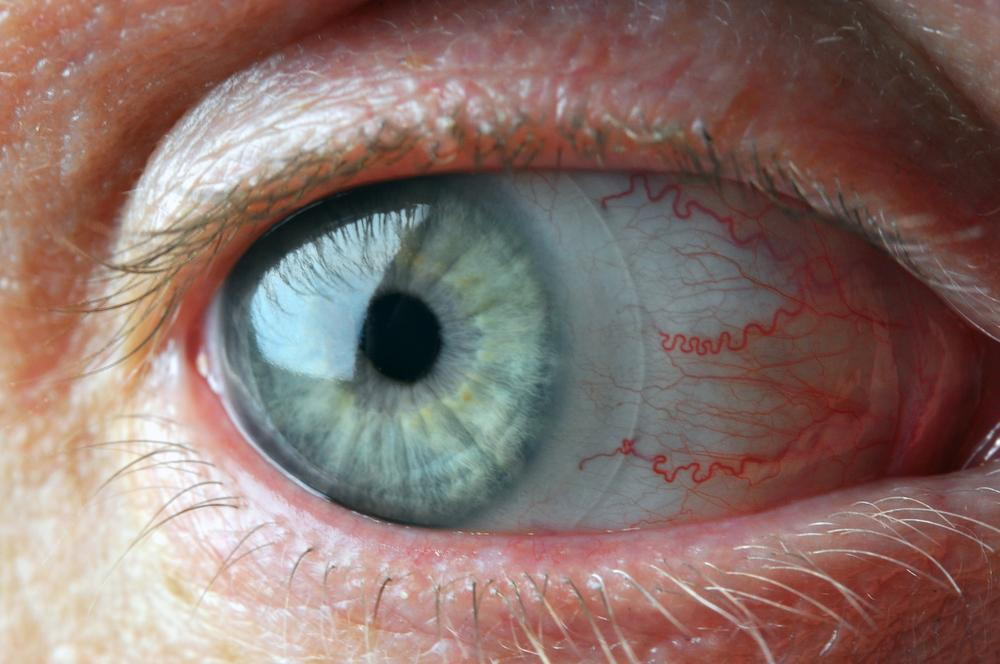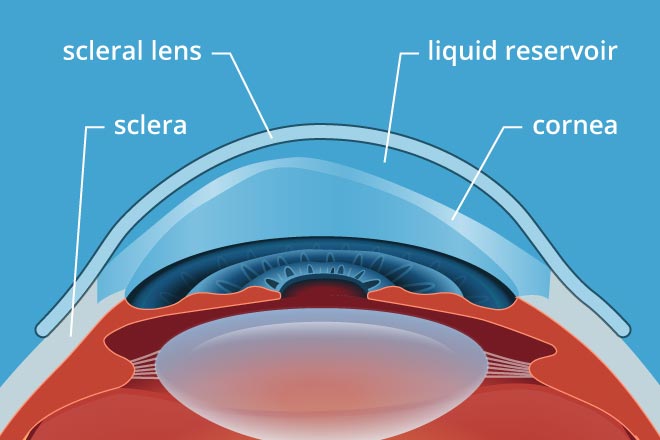
Scleral lenses vault over the entire cornea and rest on the sclera, creating a smooth optical surface and a fluid reservoir that keeps the eye lubricated. Learn who benefits most and what to expect at ProVision.
What Are Scleral Contact Lenses?
Scleral lenses are large-diameter rigid gas-permeable contact lenses that vault completely over the cornea and rest on the white part of the eye (the sclera). Unlike standard contact lenses that sit directly on the cornea, sclerals create a fluid-filled space between the lens and the corneal surface.
This design serves two critical functions:
1. Optical correction: The smooth, regular front surface of the lens corrects irregular corneal shapes that glasses and standard contacts cannot
2. Therapeutic lubrication: The saline reservoir bathes the cornea continuously, providing relief for severe dry eye and corneal surface disease
Who Benefits from Scleral Lenses?
Keratoconus
Keratoconus causes the cornea to thin and bulge into a cone shape, making standard correction impossible. Scleral lenses vault over the irregular surface and provide dramatically clearer vision than glasses or soft lenses. For many keratoconus patients, sclerals are the only way to achieve functional vision without surgery.
Severe Dry Eye
Patients with severe dry eye — including those with Sjögren's syndrome, graft-versus-host disease, or post-LASIK dry eye — often find that the saline reservoir in scleral lenses provides all-day comfort that no other treatment can match.
Post-Surgical Corneas
After corneal transplants, LASIK, or RK (radial keratotomy), the corneal surface may be irregular. Scleral lenses provide clear, stable vision regardless of the underlying corneal shape.
Irregular Astigmatism
High or irregular astigmatism that cannot be corrected with toric soft lenses or glasses responds well to scleral lens correction.
Patients Who "Can't Wear Contacts"
Many patients told they cannot wear contact lenses due to dry eye, sensitivity, or corneal irregularity are excellent scleral lens candidates.
The Scleral Lens Fitting Process at ProVision
Fitting scleral lenses requires specialized training and equipment. At ProVision Eye Associates, our fitting process includes:
Corneal Topography & OCT Imaging
We map the corneal surface in detail and measure the sagittal depth (vault height) needed to clear the cornea without touching it.
Diagnostic Lens Fitting
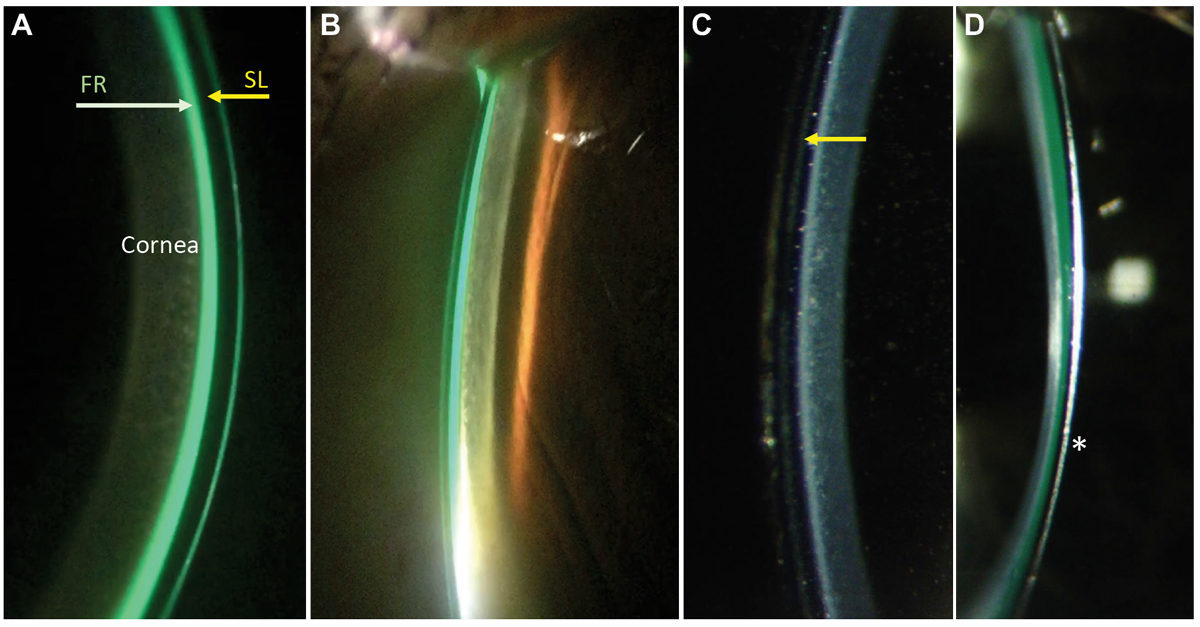
We apply a trial scleral lens and evaluate the fit using a slit lamp and fluorescein dye. We check vault height, limbal clearance, and landing zone alignment.
Refraction Over the Lens
With the scleral lens in place, we refine the prescription to achieve the best possible vision.
Training & Follow-Up
We teach insertion, removal, and filling techniques. Scleral lenses require a specific filling protocol using preservative-free saline. Follow-up visits ensure the fit remains optimal as the eye adapts.
Scleral Lenses vs. Other Options
| Option | Keratoconus | Severe Dry Eye | Irregular Cornea |
|---|---|---|---|
| Glasses | Poor | Good | Poor |
| Soft Toric Lenses | Poor | Poor | Poor |
| Corneal RGP Lenses | Good | Poor | Good |
| **Scleral Lenses** | **Excellent** | **Excellent** | **Excellent** |
Schedule a Scleral Lens Consultation in Blue Bell, PA
If you have keratoconus, severe dry eye, or have been told you can't wear contacts, scleral lenses may change your life. Call ProVision Eye Associates at (215) 628-2020 or schedule online. We serve Blue Bell, Ambler, North Wales, Lansdale, and all of Montgomery County, PA.