Many vision problems in children go undetected because kids don't know what 'normal' vision looks like. Learn when to schedule your child's first eye exam and what we look for at ProVision Eye Associates.
Children's Vision: What Parents in Blue Bell, PA Need to Know
One of the most common misconceptions about children's eye care is that a school vision screening is sufficient. It isn't. School screenings check only basic distance visual acuity — they miss the majority of vision problems that affect children's learning, development, and quality of life.
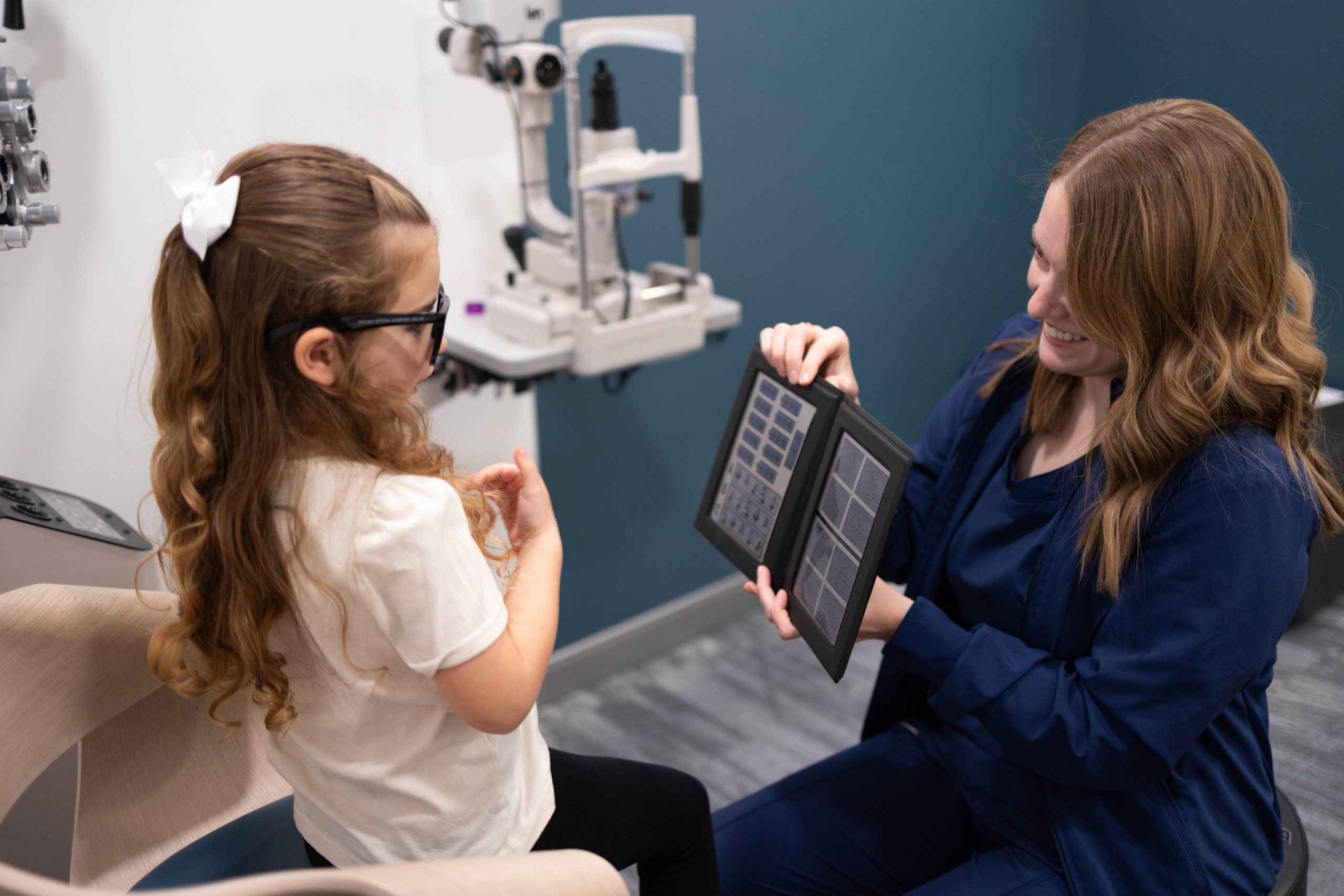
At ProVision Eye Associates in Blue Bell, PA, we perform comprehensive pediatric eye exams that go far beyond the school nurse's eye chart.
When Should My Child Have Their First Eye Exam?
The American Optometric Association (AOA) recommends the following schedule:
| Age | Recommended Exam |
|---|---|
| 6–12 months | First comprehensive eye exam (InfantSEE program — free) |
| 3 years | Pre-school exam |
| 5–6 years | Before starting kindergarten |
| 6–17 years | Every year, or as recommended |
Many parents wait until their child complains about their vision — but children rarely do. They assume everyone sees the way they do. Regular exams catch problems early, when treatment is most effective.
What We Check in a Pediatric Eye Exam
A comprehensive children's eye exam at ProVision includes:
Visual Acuity
How clearly your child sees at distance and near, using age-appropriate charts and techniques.
Refractive Error
We check for nearsightedness (myopia), farsightedness (hyperopia), and astigmatism — even in children too young to read a chart, using a technique called retinoscopy.
Binocular Vision and Eye Teaming
How well both eyes work together. Problems here — like convergence insufficiency or accommodative esotropia — are a leading cause of reading difficulties and headaches in children.
Amblyopia (Lazy Eye) Screening
Amblyopia is reduced vision in one eye that develops when the brain suppresses input from that eye during the critical developmental window. It must be caught before age 7–9 for treatment to be fully effective.
Strabismus (Eye Turn)
We check for misalignment of the eyes, which can cause double vision, amblyopia, and depth perception problems.
Eye Health
We examine the internal and external structures of the eye for any signs of disease or abnormality.
Signs Your Child May Have a Vision Problem
Watch for these warning signs between exams:
- •Sitting very close to the TV or holding books close to their face
- •Squinting or tilting their head to see
- •Frequent eye rubbing
- •Covering one eye
- •Complaints of headaches or eye strain, especially after reading
- •Losing their place while reading, or using a finger to track
- •Avoiding reading or near tasks
- •Poor performance in school despite apparent effort
Myopia Control: Protecting Your Child's Long-Term Vision
If your child is diagnosed with myopia (nearsightedness), early intervention can slow its progression and reduce their risk of serious eye disease later in life. At ProVision, we offer:
- •MiSight 1-Day FDA-approved myopia control contact lenses
- •Stellest HALT lenses (Essilor)
- •Orthokeratology (Ortho-K) overnight lenses
- •Low-dose atropine eye drops
Schedule Your Child's Eye Exam in Blue Bell, PA
Don't wait for your child to complain. Call ProVision Eye Associates at (215) 628-2020 or schedule online. We serve families from Blue Bell, Ambler, North Wales, Lansdale, Montgomeryville, Plymouth Meeting, and throughout Montgomery County, PA.